
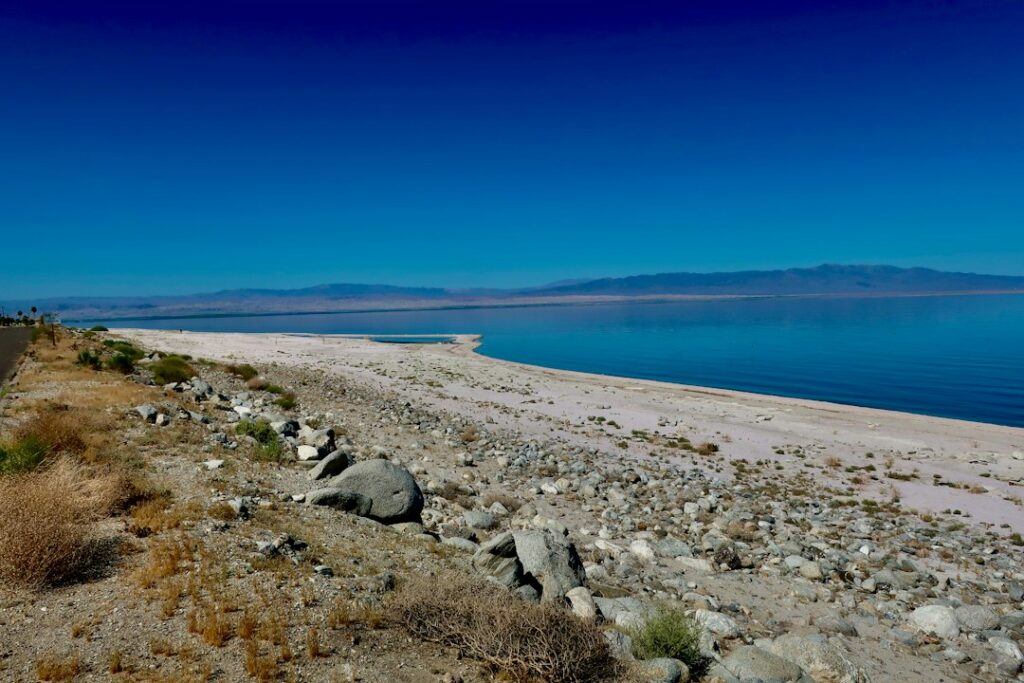
COACHELLA VALLEY — October 27, 2026. California's Salton Sea crisis did not begin with today's algae or lithium proposals. It sits inside a decades-old water-policy bargain under which Colorado River water conserved in Imperial Valley irrigation could be transferred to urban and regional users. Residents of the Coachella Valley benefit from water planning but also share a stake in the air quality and ecosystem consequences of a shrinking terminal lake.
The legal history matters
The California State Water Resources Control Board issued orders in 2002 authorizing long-term transfers of up to 300,000 acre-feet of water per year from the Imperial Irrigation District: up to 200,000 acre-feet for San Diego County Water Authority and up to 100,000 acre-feet for Coachella Valley and Metropolitan water districts. Those are authorization limits in the legal record, not a measurement of today's deliveries.
The resulting 2003 Quantification Settlement Agreement included Salton Sea mitigation requirements. The cessation of a dedicated period of mitigation water after 2017 intensified focus on what happens when the Sea receives less inflow. The lake has no outlet, and less water can expose more potentially dusty lakebed.
The current restoration requirement
California's 2017 restoration order established annual milestones reaching 29,800 acres of habitat and dust-control measures by 2028. Its 2026 cumulative milestone is 21,600 acres. The state's project dashboard separately shows what is treated, built, under construction and in design. Reading the plan and the actual stage of individual projects is the only reliable way to judge performance.
Some restoration funding is linked to additional Colorado River conservation under federal programs. Policymakers therefore need both robust demand management and credible environmental mitigation. Neither goal cancels the other.
What Coachella Valley residents should look for
How are future water savings reconciled with the lake's ecological needs? Which north-shore neighborhoods will receive dust treatment? What monitoring is available for dust, water quality and recreation? Will public benefit decisions include residents and tribal communities?
Sources: State Water Board — QSA-related orders and Salton Sea restoration milestones and SSMP project dashboard.
See the full California58 Salton Sea investigation and Coachella News.
Editor's note: This report describes state water policy and restoration commitments, not a current restriction on individual households' water use.
Support Coachella News
Choose how to support Coachella News:
Credit / Debit Card via StripeChoose your contribution amount on the secure California58 Stripe checkout. One-time support for independent local journalism.
Continue with PayPal Continue with ZelleZelle payments go to Vitaly Ataev Troshin. Please verify the recipient in your bank before sending. Availability depends on your bank.
Optional reader support. When possible, add “Coachella News” to the payment note. Contributions are not advertised as tax-deductible. Support does not influence editorial decisions.More from Coachella News
- Coachella Water and Sewer Rates: Public Hearing Process Follows Five-Year Cost Study →
- Coachella Parks and Recreation Commission Meets November 17 With Public Comment Options →
- Coachella Council Election Update: Zapata, Zamora and Martinez in November 16 Returns →
- Coachella Mayoral Count: Figueroa at 2,424 Votes, Delgado at 2,241 in November 16 Update →
- Coachella Plans Bagdouma Wellness Center Renovation and 1,500-Square-Foot Expansion →
СООБЩЕСТВО
Комментарии
Присоединяйтесь к обсуждению California58. Чтобы комментировать, необходимо войти в аккаунт.
Создайте бесплатный аккаунт California58 или войдите через доступную социальную сеть.